
Table of Contents
Introduction: The Back Pain Epidemic & The Rise of Standing Desks
Back pain is a pervasive health issue in the UK, affecting millions of adults each year. A significant contributor is the increasingly sedentary nature of modern work, particularly for those in office-based roles. Even as we move further into 2026, with hybrid and fully remote work becoming firmly established, many find themselves spending hours each day seated at a desk. This prolonged sitting has been directly linked to a surge in musculoskeletal problems, especially lower back pain. Fortunately, awareness of these issues is growing, leading to a significant increase in the popularity of standing desks as a preventative and restorative solution. The demand for healthier home office setups is booming, and standing desks are at the forefront of this trend.
Why Sitting All Day is Bad For Your Back
Prolonged sitting isn’t simply uncomfortable; it actively harms your spinal health. When you sit, your spine experiences increased compression, particularly in the lumbar region (lower back). This compression restricts blood flow and can contribute to disc degeneration. Simultaneously, sitting weakens core muscles, which are vital for supporting the spine. Furthermore, it encourages poor posture – slouching, rounded shoulders, and a forward head position – all of which exacerbate strain on the back muscles and ligaments.
Specific conditions like sciatica (pain radiating along the sciatic nerve), herniated discs (where the soft cushion between vertebrae bulges or ruptures), and spinal stenosis (narrowing of the spinal canal) can all be aggravated by prolonged sitting. Poor posture also compresses internal organs, potentially impacting digestion and breathing.
How Standing Desks Alleviate Back Pain: The Science
Standing desks offer a welcome alternative to the detrimental effects of prolonged sitting. By encouraging a more upright posture, they reduce pressure on the spinal discs and promote better spinal alignment. This, in turn, can alleviate existing back pain and prevent future problems. Standing also engages core muscles, strengthening them over time and providing greater support for the spine.
Improved circulation is another key benefit. Standing keeps blood flowing more freely, delivering essential nutrients and oxygen to the muscles and tissues in the back. Recent studies in 2026, building on earlier research, continue to demonstrate that regular standing can significantly reduce lower back pain intensity and improve functional mobility. Some studies even suggest a correlation between standing desk use and reduced inflammation markers linked to chronic pain.
Types of Standing Desks: Finding the Right Fit for You
Choosing the right standing desk depends on your individual needs, space, and budget. Here’s a breakdown of the most common types available in the UK market:
Fixed-Height Standing Desks
These desks are at a set height, designed for standing only. They are the most affordable option but offer no flexibility.
Pros
- Most affordable
- Simple and sturdy construction
Cons
- No adjustability
- May not suit all users’ heights
Adjustable (Electric) Standing Desks
These desks allow you to easily adjust the height with the press of a button, transitioning seamlessly between sitting and standing. They are the most versatile option.
Pros
- Fully adjustable height
- Promotes dynamic movement
- Suitable for multiple users
Cons
- More expensive than fixed-height desks
- Requires power outlet
Converter Desks (Desk Risers)
These sit on top of your existing desk, transforming it into a standing workstation. A good option if you’re not ready to replace your entire desk.
Pros
- Relatively affordable
- Easy to install
- Doesn’t require replacing your existing desk
Cons
- Limited workspace
- Can feel less stable than a full standing desk
Corner Standing Desks
Designed to fit into a corner, maximizing space in smaller offices or home workspaces.
Pros
- Space-saving design
- Offers a large work surface
- Can be more expensive
- Less flexible in terms of room layout
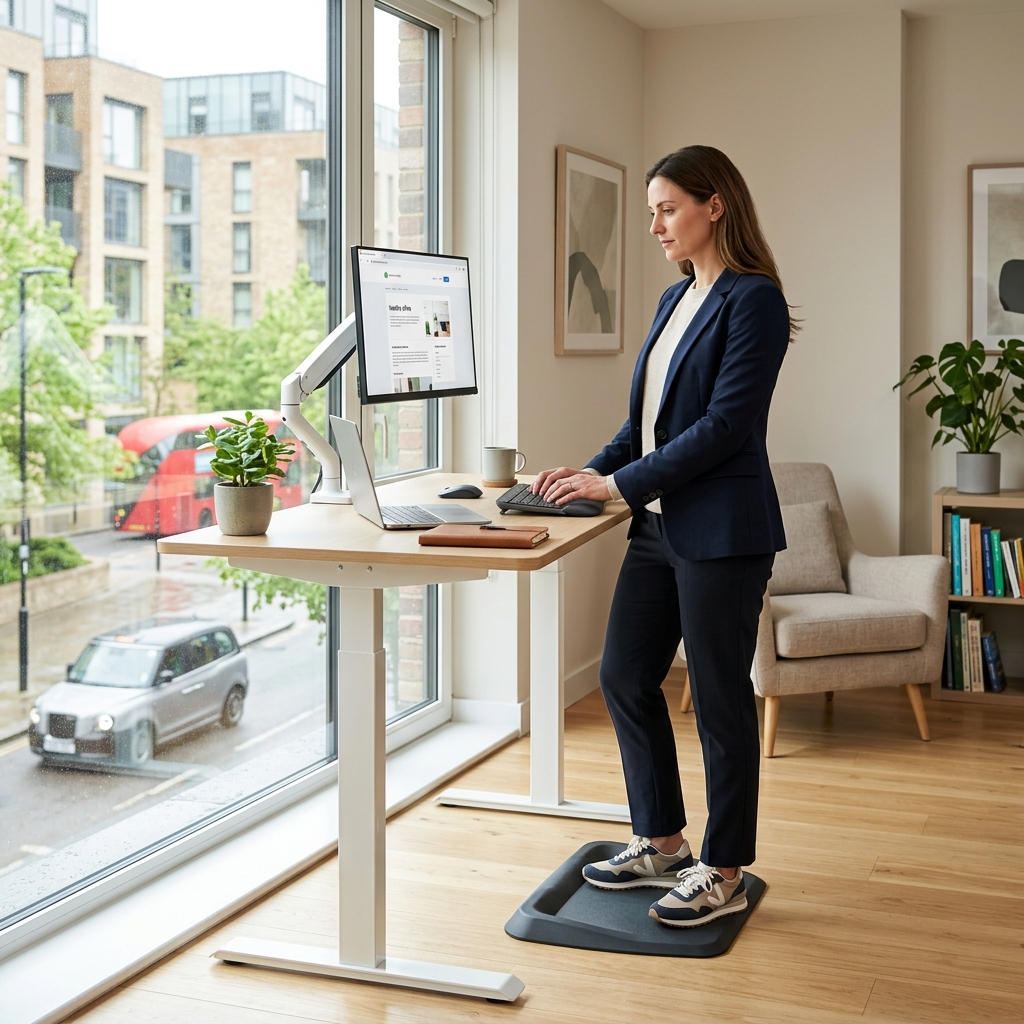
Setting Up Your Standing Desk for Optimal Back Health
Simply having a standing desk isn’t enough. Proper setup is crucial for maximizing benefits and avoiding new aches and pains. Follow these steps:
- Desk Height: Adjust the desk so your elbows are bent at a 90-degree angle when typing.
- Monitor Placement: The top of your monitor should be at or slightly below eye level.
- Keyboard & Mouse: Position your keyboard and mouse close to your body to avoid reaching.
- Anti-Fatigue Mat: Invest in a good quality anti-fatigue mat to cushion your feet and reduce strain on your legs and back.
- Gradual Transition: Don’t switch to standing all day immediately. Start with short periods (30 minutes) and gradually increase the duration as you get accustomed to it.
Beyond the Desk: Complementary Strategies for Back Pain Relief
A standing desk is a great start, but it’s most effective when combined with other healthy habits:
- Regular Stretching: Incorporate stretches into your daily routine to improve flexibility and reduce muscle tension.
- Core Strengthening Exercises: Strengthening your core muscles provides crucial support for your spine.
- Proper Lifting Techniques: Bend at the knees, not your back, when lifting objects.
- Healthy Weight: Maintaining a healthy weight reduces stress on your spine.
- Physiotherapy: If you’re experiencing chronic back pain, consider consulting a physiotherapist for tailored exercises and treatment.
Standing Desk Accessories: Enhance Comfort & Productivity (2026)
Enhance your standing desk experience with these accessories:
| Accessory | Description | Approximate Price (GBP) |
|---|---|---|
| Anti-Fatigue Mat | Cushions feet and reduces strain. | £45.0 (Amazon Basics Premium) – £149.99 (Topo by Ergodynamic) |
| Monitor Arm | Improves monitor positioning and frees up desk space. | £299.0 (Ergotron LX) |
| Keyboard Tray | Optimizes keyboard height and angle. | £80 – £150 |
| Footrest | Provides support for your feet and encourages movement. | £30 – £70 |
| Cable Management Solutions | Keeps cables organized and prevents tripping hazards. | £20 – £50 |
| Posture Sensors (New – 2026) | Integrated sensors that provide real-time feedback on your posture, alerting you to slouching or incorrect positioning. | £70 – £180 |
Common Mistakes to Avoid When Using a Standing Desk
Avoid these pitfalls to ensure you reap the full benefits of your standing desk:
- Standing for Too Long Without Breaks: Alternate between sitting and standing throughout the day.
- Poor Posture While Standing: Maintain good posture – shoulders relaxed, core engaged, and head aligned.
- Inadequate Footwear: Wear comfortable, supportive shoes or use an anti-fatigue mat.
- Static Standing: Don’t just stand still. Shift your weight, move your legs, and take short walks.
Conclusion: Invest in Your Back Health with a Standing Desk
Standing desks offer a compelling solution for alleviating and preventing back pain, particularly in the context of the evolving UK work landscape of 2026. By promoting better posture, engaging core muscles, and reducing pressure on the spine, they can significantly improve your spinal health and overall well-being. While the initial investment may seem substantial, consider it an investment in your long-term health and productivity. The UK home office market is expected to continue its growth trajectory, with standing desks becoming an increasingly standard feature in many workspaces. Prioritize your back health – make the switch to a standing desk today.
Frequently Asked Questions (FAQ)
Q: How long should I stand at my desk each day?
Start with short intervals of 30 minutes and gradually increase the duration as your body adapts. A good goal is to aim for a balance of sitting and standing throughout the day – perhaps 2 hours of standing for every 6 hours of work.
Q: Will a standing desk cure my existing back pain?
A standing desk can significantly alleviate back pain for many people, but it’s not a guaranteed cure. It’s most effective when combined with other strategies like exercise, stretching, and good posture. Consult a healthcare professional for personalized advice.
Q: Are adjustable standing desks worth the extra cost?
For most people, yes. The ability to alternate between sitting and standing provides the greatest benefits and flexibility. It allows you to tailor your workstation to your individual needs and prevent fatigue.
Q: What is the best anti-fatigue mat to buy?
The Topo by Ergodynamic anti-fatigue mat is highly recommended for its unique contouring and excellent cushioning. However, the Amazon Basics Premium Anti-Fatigue Mat is a more affordable option that still provides good support.
Q: Can I use my existing desk with a standing desk converter?
Yes, desk converters are designed to sit on top of your existing desk and raise your monitor and keyboard to a comfortable standing height. However, be mindful of the stability and workspace size.