
Table of Contents
Introduction: The Importance of Lighting in Your Home Office
The way we work has undergone a significant shift in recent years, with more and more of us embracing the flexibility of home working. As a result, the home office has become an essential space for many. But often overlooked is the critical role of lighting. Good lighting isn’t just about visibility; it’s fundamental to productivity, eye health, and even your mood. Poorly lit spaces can lead to eye strain, headaches, and decreased concentration. In 2026, with our increased reliance on digital devices and longer working hours, creating a comfortable and functional home workspace, starting with thoughtful lighting, is more important than ever. This article will guide you through the options available in the UK market, helping you illuminate your way to a more productive workday.
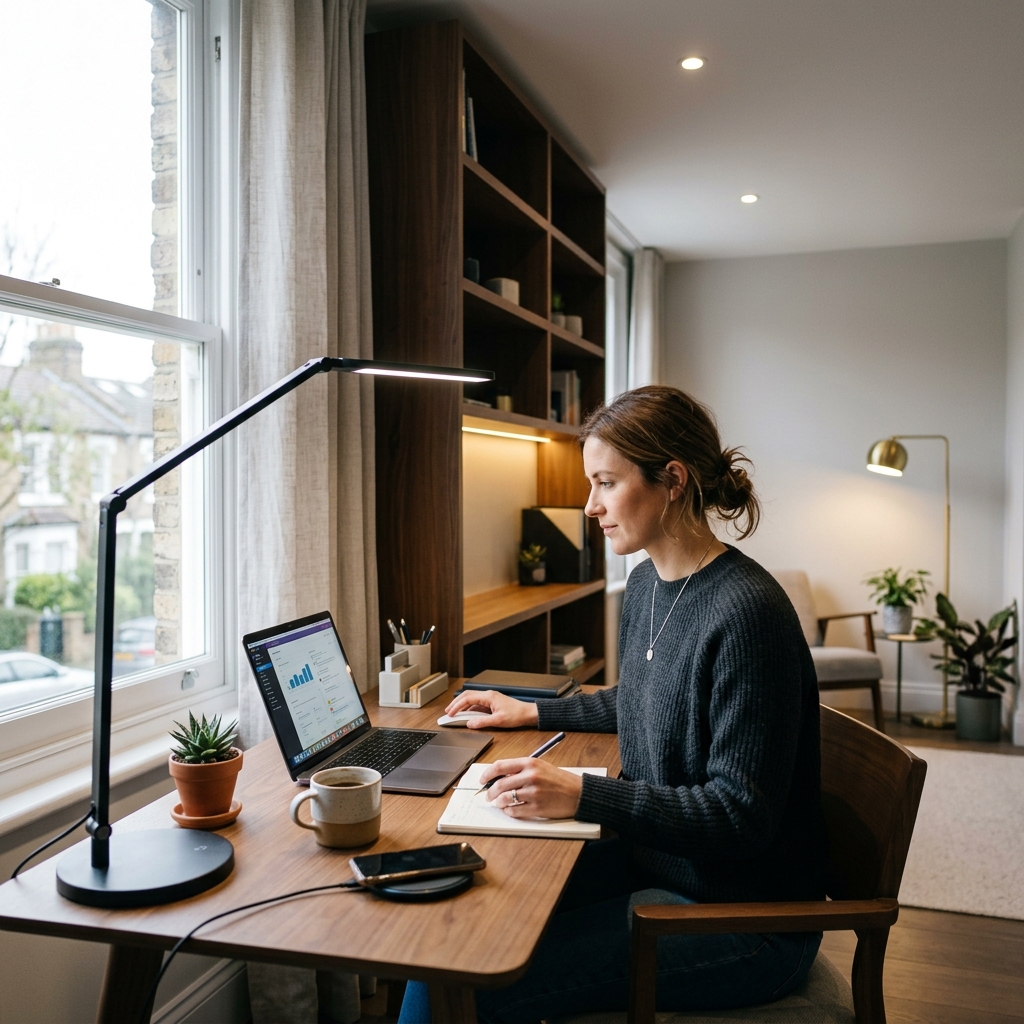
Understanding Different Types of Home Office Lighting
Effective home office lighting isn’t about one bright light source. It’s about layering different types of lighting to create a balanced and comfortable environment. Here’s a breakdown of the core categories:
- Ambient Lighting: This provides overall illumination for the room – your general ‘room lighting’. It establishes the base level of brightness.
- Task Lighting: Focused and direct, task lighting is specifically designed to illuminate your work area, like your desk.
- Accent Lighting: This is primarily decorative, used to add visual interest, highlight features (like artwork or plants), and create a more inviting atmosphere.
Crucially, consider colour temperature, measured in Kelvin (K). Lower Kelvin values (2700K-3000K) produce warmer, yellower light, creating a cosy and relaxing atmosphere. Higher Kelvin values (4000K-6500K) produce cooler, bluer light, which is more energising and promotes focus. For a home office, a colour temperature between 3500K and 5000K is generally recommended, leaning towards the cooler end for tasks requiring intense concentration.
Ambient Lighting for a Welcoming Home Office
For overall room illumination, several options are available. LED panels are a popular choice, offering energy efficiency and a clean, modern look. Prices typically range from £30 to £150 depending on size and features. For more traditional setups, a chandelier might be appropriate. However, ensure it provides sufficient brightness and doesn’t create glare.
Smart bulbs, like the Philips Hue White and Colour Ambiance Starter Kit – £189.99, are increasingly popular. They allow you to adjust brightness and colour temperature remotely, creating different lighting scenes for various tasks. Layering ambient light is key. A combination of a central ceiling fixture and a couple of strategically placed lamps can create a more balanced and comfortable feel.
Task Lighting: Illuminating Your Workspace
Task lighting is arguably the most important element of your home office lighting scheme. Desk lamps are the obvious choice, but consider an adjustable lamp that allows you to direct the light precisely where you need it. The IKEA VARMLAMP LED Desk Lamp – £29.99 is a budget-friendly option, while the John Lewis & Partners Adjustable Task Lamp – £75.00 offers more features and a premium build quality.
Under-cabinet lighting can also be useful, particularly if you have shelving or storage above your desk. Ergonomics are vital here. Position your lamp to avoid glare on your computer screen. The light source should be to the side of your dominant hand to prevent shadows. Look for lamps with adjustable brightness levels to suit different tasks and times of day.
Accent Lighting: Adding Style and Depth
Accent lighting isn’t essential, but it can significantly enhance the atmosphere of your home office. Wall sconces, like the Habitat Nova Wall Sconce – £45.00, add a touch of elegance and can provide subtle illumination. Floor lamps are versatile and can be used to create pools of light in corners of the room. LED strip lighting, such as the Lumino LED Strip Lights – £35.00, can be used to highlight artwork, plants, or architectural features. Use accent lighting to create visual interest and a more inviting workspace.
Top Lighting Trends for UK Home Offices in 2026
Several trends are shaping home office lighting in 2026:
- Biophilic Lighting: Mimicking natural light patterns, this trend focuses on dynamic lighting that changes throughout the day to support your circadian rhythm.
- Integrated Smart Home Lighting Systems: Controlling all your lighting from a single app or voice assistant is becoming increasingly common.
- Minimalist Lighting Designs: Clean lines, simple shapes, and muted colours are popular choices for a modern aesthetic.
- Sustainable Lighting Options: Energy-efficient LED bulbs and lamps made from recycled materials are gaining traction.
The Dyson Lightcycle Morph Floor Lamp – £499.99 exemplifies some of these trends, offering intelligent lighting that adjusts to your needs and mimics natural daylight.
Lighting for Different Home Office Setups
The best lighting solution will depend on your specific office setup:
- Small Apartments: Focus on multi-functional lighting. Opt for adjustable desk lamps and smart bulbs that can adapt to different tasks and moods.
- Dedicated Home Offices: You have more flexibility here. Layer ambient, task, and accent lighting to create a well-lit and inviting space.
- Standing Desks: Ensure your task lighting can be easily adjusted to accommodate different heights. A floor lamp with an adjustable head is a good option.
- Corner Offices: Utilise wall sconces or adjustable lamps to illuminate the corners of the room and avoid shadows.
- Limited Natural Light: Invest in full-spectrum LED bulbs that mimic natural daylight. Consider a light therapy lamp to boost your mood and energy levels.
Avoiding Common Lighting Mistakes
Here are some common lighting pitfalls to avoid:
- Glare: Position your light sources to avoid glare on your computer screen or other reflective surfaces.
- Flickering Lights: Flickering lights can cause eye strain and headaches. Invest in high-quality LED bulbs.
- Poor Colour Rendering: Choose bulbs with a high Colour Rendering Index (CRI) to ensure accurate colour representation.
- Insufficient Illumination: Make sure your workspace is adequately lit, especially for tasks requiring close attention.
Where to Buy Home Office Lighting in the UK (2026)
Here are some reputable retailers for home office lighting in the UK:
- John Lewis & Partners: Wide range of lighting options, from budget-friendly to premium. (Price range: £20 – £500+)
- IKEA: Affordable and stylish lighting solutions. (Price range: £10 – £100+)
- B&Q: Good selection of LED bulbs and task lamps. (Price range: £15 – £200+)
- Argos: Convenient online and in-store shopping. (Price range: £20 – £300+)
- Habitat: Contemporary designs and stylish lighting options. (Price range: £30 – £400+)
- Dyson: Innovative and high-end lighting solutions. (Price range: £400+)
Conclusion: Creating Your Ideal Home Office Lighting Scheme
Creating the perfect home office lighting scheme is a personal process. Remember the importance of layering different types of lighting, considering colour temperature, and avoiding common mistakes. Don’t be afraid to experiment with different options until you find what works best for your needs and preferences. The Anglepoise Type 75 Desk Lamp – £140.00 remains a classic choice, offering both style and functionality. Investing in good lighting is an investment in your productivity, well-being, and overall work experience.
FAQ
What colour temperature is best for a home office?
Generally, a colour temperature between 3500K and 5000K is recommended for a home office. This provides a balance between warmth and energising coolness, promoting focus and concentration.
How much light do I need for my home office?
A good rule of thumb is to aim for around 500 lux on your desk surface. You may need more for tasks requiring close attention. Adjustable task lighting is essential to tailor the brightness to your specific needs.
Are smart bulbs worth the investment?
Smart bulbs offer convenience and flexibility, allowing you to control brightness and colour temperature remotely. While they are more expensive upfront, the long-term benefits in terms of customisation and energy savings can make them a worthwhile investment.
What is the Colour Rendering Index (CRI)?
CRI measures how accurately a light source renders colours compared to natural sunlight. A higher CRI (closer to 100) indicates more accurate colour representation. For a home office, a CRI of 80 or higher is recommended.
How can I reduce glare from my computer screen?
Position your light sources to avoid direct reflection on your screen. Use a matte screen protector, adjust the brightness of your monitor, and consider using a desk lamp with a diffuser to soften the light.