
Table of Contents
Why Choosing the Right Office Chair Matters
In 2026, the landscape of work continues to shift dramatically, with a significant increase in the number of UK-based remote workers. This means more of us are spending extended periods seated at home offices, often without the ergonomic setups found in traditional workplaces. A seemingly simple piece of furniture – the office chair – plays a crucial role in our overall health, wellbeing, and productivity. Poor posture, often a result of an inadequate chair, can lead to debilitating back pain, repetitive strain injury (RSI), and reduced concentration. Investing in the right chair isn’t a luxury; it’s a necessity for maintaining physical health and optimal performance.
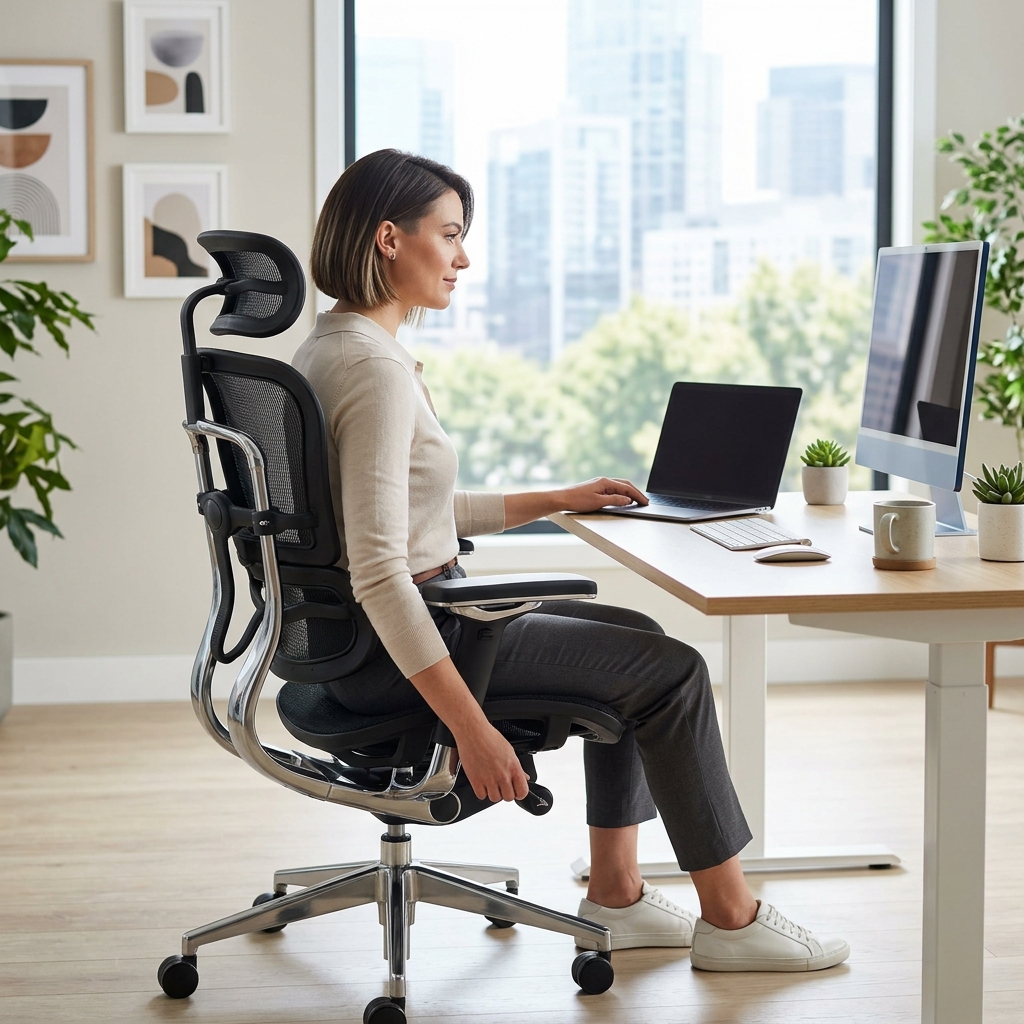
Understanding Office Chair Ergonomics
Ergonomics is the science of designing for human use. When applied to office chairs, it means creating a seating solution that supports the natural curvature of your spine, promotes good posture, and reduces strain. Here are key ergonomic features to understand:
Key Ergonomic Features
- Lumbar Support: This is arguably the most important feature. Adjustable lumbar support helps maintain the natural inward curve of your lower back, preventing slouching.
- Seat Height: Your feet should be flat on the floor, or supported by a footrest, with your knees at a 90-degree angle.
- Seat Depth: There should be 2-4 inches of space between the back of your knees and the front edge of the seat.
- Armrest Adjustability: Adjustable armrests support your forearms, reducing strain on your shoulders and neck. They should allow your elbows to rest comfortably at a 90-degree angle.
- Headrest: A headrest provides support for your head and neck, especially during periods of relaxation or when leaning back.
- Tilt Tension/Lock: Allows you to recline comfortably and lock the chair in various positions. Tilt tension controls the amount of effort required to recline.
[Diagram illustrating correct posture in an ergonomic chair would be placed here in a real article.]
Types of Office Chairs: Which is Best for You?
The market is flooded with office chair options. Here’s a breakdown of common types:
Task Chairs
Designed for general office work, task chairs are typically adjustable and provide basic ergonomic support. They’re a good all-rounder.
Executive Chairs
Often larger and more plush than task chairs, executive chairs prioritize comfort and aesthetics. They often feature high backs and padded armrests. May not be ideal for those needing extreme adjustability.
Mesh Chairs
Mesh chairs offer excellent breathability, keeping you cool and comfortable during long work hours. They are typically more affordable than leather options.
Leather Chairs
Leather chairs exude a sense of luxury and are generally durable. However, they can be expensive and may not be as breathable as mesh options.
Kneeling Chairs
These chairs position your body in a more open posture, reducing pressure on your lower back. They require an adjustment period and aren’t suitable for everyone.
Gaming Chairs (and Office Suitability)
While designed for gaming, many gaming chairs offer strong lumbar support and adjustability, making them suitable for office work – especially for those who appreciate a more ‘bucket seat’ feel. Aesthetics can be a drawback for some office environments.
| Chair Type | Pros | Cons |
|---|---|---|
| Task Chair | Adjustable, Affordable, Versatile | May lack premium comfort features |
| Executive Chair | Comfortable, Aesthetically Pleasing, Durable | Can be expensive, Less ergonomic adjustability |
| Mesh Chair | Breathable, Affordable, Lightweight | May not be as durable as leather |
| Leather Chair | Luxurious, Durable, Professional Look | Expensive, Can get hot, Requires maintenance |
| Kneeling Chair | Promotes good posture, Reduces back pain | Requires adjustment period, Not suitable for all |
| Gaming Chair | Excellent lumbar support, Highly adjustable, Comfortable | Aggressive aesthetics, Can be bulky |
Key Features to Look For in 2026
Office chair technology is constantly evolving. In 2026, look for chairs featuring:
- Dynamic Movement: Chairs that encourage subtle movement throughout the day, rather than forcing a static posture.
- Adaptive Lumbar Support: Lumbar support that automatically adjusts to your spine’s curve.
- Breathable Materials: Advanced mesh fabrics and ventilation systems to maximise airflow.
- Integrated Tech: Some chairs now include posture sensors that provide feedback and alerts via a connected app.
- Sustainable Materials: Increasingly, manufacturers are using recycled materials and sustainable manufacturing processes. Look for certifications like the FSC (Forest Stewardship Council) for wood components.
Materials: Mesh vs. Fabric vs. Leather
The material of your chair significantly impacts its comfort, durability, and price.
- Mesh: Excellent breathability, lightweight, affordable, but can be less durable.
- Fabric: Good comfort, wide range of colours and patterns, moderate durability, can stain easily.
- Leather: Luxurious, durable, professional look, but expensive, can get hot, requires maintenance. Vegan Leather: A growing alternative offering a similar aesthetic without the ethical concerns of traditional leather. Quality varies greatly, so research is key.
Budget Breakdown: How Much Should You Spend?
The price of an office chair can vary dramatically. Here’s a guide:
- Under £150: Basic task chairs with limited adjustability. (e.g., Amazon Basics High-Back Mesh Chair – £80, Hbada Office Task Chair – £120)
- £150 – £300: Mid-range task chairs with better ergonomic features and durability. (e.g., IKEA Markus Chair – £250, Sihoo M57 Ergonomic Office Chair – £200)
- £300 – £500: High-quality task or mesh chairs with advanced adjustability and comfort. (e.g., Autonomous ErgoChair Pro – £350)
- £500+: Premium executive and ergonomic chairs with exceptional build quality, materials, and features. (e.g., Herman Miller Aeron Chair – £1600, Steelcase Gesture Chair – £1400, Secretlab Titan Evo 2026 – £450)
Investing in a chair with adjustable lumbar support, seat height, and armrests is generally worth the extra cost. Don’t skimp on quality – a good chair is a long-term investment in your health and productivity.
Trying Before You Buy (or Understanding Return Policies)
Ideally, test a chair in person before purchasing. Sit in it for at least 15-20 minutes, adjusting all the features to find your optimal settings. Pay attention to how the chair supports your back, shoulders, and thighs. If buying online, carefully review the return policy. Look for companies that offer a generous trial period (30 days or more) and free returns. Understand the warranty coverage, too. A longer warranty indicates the manufacturer’s confidence in the product’s durability.
Top Office Chair Brands in the UK (2026)
- Herman Miller: (Price Range: £1200+) Renowned for its ergonomic design and exceptional build quality. The Aeron is an industry standard. Expensive, but incredibly durable.
- Steelcase: (Price Range: £1000+) Another premium brand known for its innovative features and comfort. The Gesture chair is highly adaptable. Similar price point to Herman Miller.
- Secretlab: (Price Range: £350 – £500) Popular with gamers, but their Titan Evo 2026 is surprisingly comfortable and supportive for office work. Good value for money.
- Autonomous: (Price Range: £300 – £400) Offers a range of ergonomic chairs at competitive prices. The ErgoChair Pro is a popular choice.
- IKEA: (Price Range: £150 – £300) Provides affordable and functional office chairs. The Markus is a well-regarded budget option.
Maintaining Your Office Chair for Longevity
Regular maintenance can extend the life of your office chair:
- Cleaning: Wipe down the chair regularly with a damp cloth. Use appropriate cleaning products for the material (leather cleaner for leather, etc.).
- Tighten Screws: Periodically check and tighten all screws and bolts.
- Lubricate Mechanisms: Apply lubricant to moving parts to ensure smooth operation.
- Avoid Overloading: Don’t exceed the chair’s weight capacity.
FAQ
- How often should I get up from my office chair?
Experts recommend getting up and moving around for at least 5 minutes every hour. - What is the ideal seat height for an office chair?
Your feet should be flat on the floor, or supported by a footrest, with your knees at a 90-degree angle. - Is a more expensive chair always better?
Not necessarily. It’s more important to find a chair that fits your body and provides the ergonomic support you need, regardless of price. - What should I do if I experience back pain while sitting?
Adjust your chair’s lumbar support, seat height, and armrests. If the pain persists, consult a healthcare professional. - How important is the warranty on an office chair?
A longer warranty (5 years or more) indicates the manufacturer’s confidence in the product’s durability and provides peace of mind.