
Table of Contents
As an Amazon Associate, we earn from qualifying purchases. This means we may receive a small commission at no extra cost to you when you buy through links on this page.
Introduction: Why Add Plants to Your Home Office?
In 2026, the home office is more prevalent than ever. As we continue to blend work and life, we’re also increasingly aware of the importance of creating a workspace that supports our wellbeing. Far beyond mere decoration, desk plants offer a wealth of benefits. Studies consistently show that incorporating greenery into our environments can boost productivity by as much as 15%, reduce stress levels, improve air quality, and enhance the overall aesthetics of our workspace. This ties into the growing trend of biophilic design – intentionally connecting with nature within built environments – a cornerstone of modern home office design in 2026.
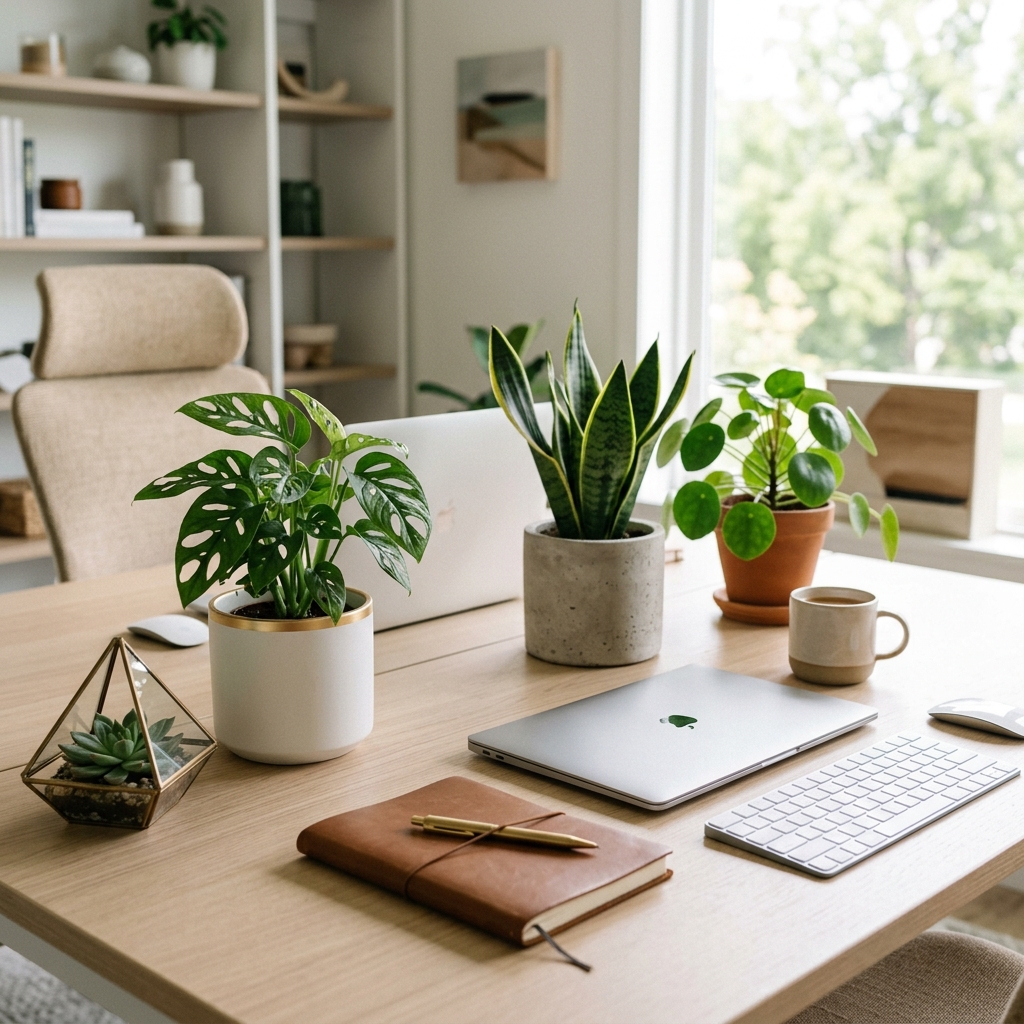
Understanding Your Office Environment
Before you rush out to buy the first plant you see, it’s crucial to assess your office environment. The success of your desk plant will depend on how well it suits its surroundings.
- Light Levels: Is your office bathed in natural light, or is it dimly lit? Categorize your light as Low (north-facing window or limited natural light), Medium (east or west-facing window), or Bright (south-facing window).
- Humidity: Consider the humidity levels. Central heating can dry the air, requiring plants that tolerate low humidity or regular misting.
- Temperature: Most indoor plants thrive in typical room temperatures (18-24°C). Avoid placing plants near drafts or heat sources.
- Available Space: How much desk space do you have? A sprawling Monstera might not be ideal for a small desk!
A quick assessment: Observe your office throughout the day to gauge light levels and temperature fluctuations. Consider using a humidity monitor (available from around £10 at most hardware stores) for a more accurate reading.
Top 10 Desk Plants for Low Light Conditions (2026)
For offices with limited natural light, these plants are your best bet:
| Plant Name | Care Level | Light Requirements | Watering | Potential Issues |
|---|---|---|---|---|
| Snake Plant (Sansevieria trifasciata) | Very Easy | Low | Allow soil to dry completely between waterings. | Overwatering can cause root rot. |
| ZZ Plant (Zamioculcas zamiifolia) | Very Easy | Low | Water sparingly, allowing soil to dry thoroughly. | Slow growth, susceptible to root rot if overwatered. |
| Peace Lily (Spathiphyllum) | Easy | Low to Medium | Keep soil consistently moist, but not soggy. | Drooping leaves indicate it needs watering. Can be sensitive to hard water. |
| Cast Iron Plant (Aspidistra elatior) | Very Easy | Low | Water when the soil is dry to the touch. | Extremely hardy, but slow-growing. |
| Chinese Evergreen (Aglaonema) | Easy | Low to Medium | Water when the top inch of soil is dry. | Susceptible to spider mites in dry conditions. |
| Prayer Plant (Maranta leuconeura) | Medium | Low to Medium | Keep soil consistently moist and mist regularly. | Requires higher humidity than some other low-light plants. |
| Pothos (Epipremnum aureum) – Golden Pothos | Easy | Low to Medium | Water when the top inch of soil is dry. | Can be toxic to pets. |
| Parlour Palm (Chamaedorea elegans) | Easy | Low to Medium | Water when the top inch of soil is dry. Mist regularly. | Sensitive to fluoride in tap water. |
| Bird’s Nest Fern (Asplenium nidus) | Medium | Low to Medium | Keep soil consistently moist and mist frequently. | Requires high humidity. |
| Dragon Tree (Dracaena marginata) | Easy | Low to Medium | Allow soil to dry out slightly between waterings. | Sensitive to fluoride in tap water. |
Best Air Purifying Desk Plants (2026)
According to the NASA Clean Air Study, certain plants excel at removing toxins from the air. Investing in these can contribute to a healthier, more productive workspace.
- Spider Plant (Chlorophytum comosum): Removes formaldehyde and xylene. Easy to propagate.
- Boston Fern (Nephrolepis exaltata): Excellent for removing formaldehyde, xylene, and ammonia. Requires high humidity.
- English Ivy (Hedera helix): Removes mould and allergens. Can be grown trailing from shelves. Caution: toxic to pets.
- Areca Palm (Dypsis lutescens): A natural humidifier, removing benzene, formaldehyde, and trichloroethylene.
- Peace Lily (Spathiphyllum): (Also listed above) Removes a wide range of toxins.
Improved air quality can lead to reduced headaches, fatigue, and improved concentration – crucial for a productive workday.
Easy-Care Desk Plants for Beginners (2026)
New to plant parenthood? These plants are incredibly forgiving:
| Plant Name | Care Level | Watering | Light |
|---|---|---|---|
| Succulents (Echeveria, Haworthia) | Very Easy | Water sparingly, allowing soil to dry completely. | Bright, indirect light. |
| Pothos (Epipremnum aureum) | Easy | Water when the top inch of soil is dry. | Low to Medium |
| Cast Iron Plant (Aspidistra elatior) | Very Easy | Water when the soil is dry to the touch. | Low |
Stylish Desk Plants for a Modern Home Office (2026)
For those seeking a touch of sophistication, these plants offer unique aesthetics:
- Calathea: Known for their striking patterned leaves. Requires high humidity.
- Monstera Deliciosa (small varieties): Iconic split leaves add a tropical vibe.
- Fiddle Leaf Fig (miniature): A scaled-down version of the popular Fiddle Leaf Fig, perfect for smaller spaces.
- String of Pearls (Senecio rowleyanus): A cascading succulent that looks stunning in hanging planters.
Desk Plant Styling Tips & Ideas (2026)
- Vary Pot Sizes: Use a mix of small, medium, and large pots to create visual interest.
- Choose Complementary Materials: Pair plants with pots made from materials like ceramic, terracotta, or woven baskets. A Lechuza Cubico Colour Planter (£25.00 from Thompson & Morgan) offers a sleek, modern look.
- Shelving Units: Incorporate trailing plants like Pothos onto shelves to create a lush, layered effect.
- Mini Indoor Jungle: Group several plants together for a maximalist aesthetic.
Troubleshooting Common Desk Plant Problems (2026)
- Overwatering: Yellowing leaves and soggy soil. Allow soil to dry out completely before watering.
- Underwatering: Wilting leaves and dry soil. Water thoroughly.
- Pests: Inspect plants regularly for pests like spider mites or aphids. Treat with an Indoor Plant Pest Control Spray (£9.99 from Notcutts).
- Lack of Light: Stunted growth and pale leaves. Move plant to a brighter location or supplement with a Grow Light for Indoor Plants (£29.99 from Amazon).
Where to Buy Desk Plants in the UK (2026)
- Beards & Daisies: Specializing in curated plant collections. Botanical Desk Plant Collection (£45.00).
- Dobbies: Wide range of plants and gardening supplies. Organic House Plant Food (£7.50).
- IKEA: Affordable pots and planters, including Self-Watering Desk Planter (£12.00).
- Thompson & Morgan: Reputable online retailer with a vast selection.
- Wilko: Budget-friendly plants and accessories. Mist Sprayer for Plants (£5.00).
- B&Q: Gardening essentials, including Plant Support Stakes (£6.00).
- Dunelm: Stylish home accessories, including Watering Can – Rose Gold (£18.00).
- Notcutts: Garden centres across the UK with a good plant selection.
Conclusion: Creating a Productive & Green Home Office
Adding desk plants to your home office isn’t just about aesthetics; it’s an investment in your wellbeing and productivity. By choosing plants that suit your environment and providing them with proper care, you can create a thriving workspace that inspires creativity and reduces stress. Don’t forget to brush up on your plant knowledge with resources like “The Little Book of House Plants” (£8.99 from Octopus Books) – a fantastic guide for beginners. Embrace the power of greenery and cultivate a healthier, more vibrant home office in 2026!
FAQ
- How often should I water my desk plants? The watering frequency depends on the plant species, pot size, and environmental conditions. Generally, allow the top inch of soil to dry out before watering.
- What if I keep killing my plants? Start with easy-care plants like Snake Plants or ZZ Plants. Ensure the plant is receiving the appropriate amount of light and avoid overwatering.
- Are some desk plants toxic to pets? Yes, some plants like English Ivy and Pothos are toxic to cats and dogs. Research before purchasing and keep potentially harmful plants out of reach.
- How can I increase humidity for my plants? Misting plants regularly, grouping them together, or using a humidifier can increase humidity levels.
- Do I need to fertilize my desk plants? Yes, fertilizing during the growing season (spring and summer) can provide plants with essential nutrients. Use an Organic House Plant Food (£7.50 from Dobbies).